OUR LITERARY HERITAGE & RESEARCH INITIATIVE
Recovering forgotten voices. Preserving our stories. Reclaiming our literary legacy.
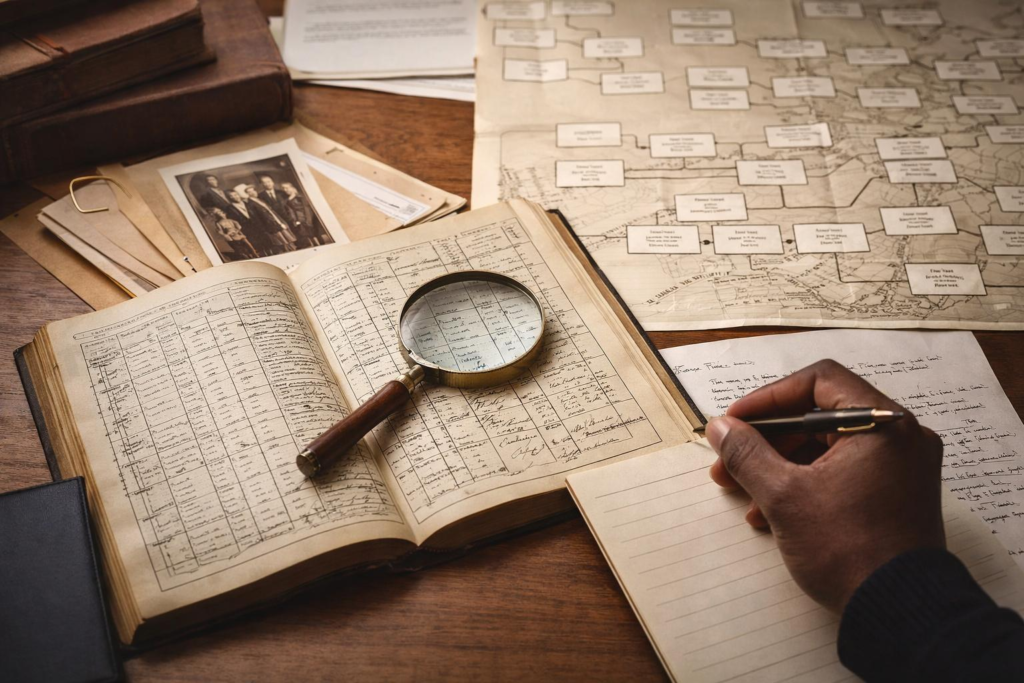
Through historical research, genealogy, and archival exploration, Taevo Publishing is working to uncover and preserve the literary contributions of Foundational Black American writers, publishers, printers, and storytellers.
Our mission is to bring overlooked voices and historical works into the light—connecting generations through the power of the written word.
WHY THIS INITIATIVE EXISTS
A message from Tamara Mayo, Founder of Taevo Publishing
As a publisher, writer, reader, historian, and researcher, over the past 20 years I’ve become increasingly interested in the literary history of my people—not just the history that has been presented to us, but the true story that remains scattered throughout archives, libraries, historical records, and family collections. We’ve been fed “his-story” all our lives – it’s time to start uncovering and celebrating the “true-story” – or “trustory”, as I’ve become fond of calling these treasures we seek.
And the more I seek and find truths outside the lens of the European account of history, the more questions I have: Who were our earliest writers? How did they publish and print their earlier works? Who distributed their stories? Did any of them survive? What were they reading, writing, teaching, and documenting? What can we learn about their lives through the words they left behind?
I want to explore our literary history beyond the familiar names, commonly taught historical periods, and established narratives of Black writers presented to us by a power structure we’ve never truly controlled or belonged to. This is about discovering the people whose contributions have been overlooked, forgotten, misidentified, or excluded from the literary history we are taught today.
And listen, over here, we don’t care if you call yourself FBA, ADOS, Original Americans, Soulaan, Indigenous Americans, or Freedmen… we don’t worry about semantics because everyone knows who exactly we’re referring to when we use those terms. As we steadily peel back the layers of deception fed to us disguised as history and replace them with new tapestries of “trustory”, I believe we will discover the True Name that identifies and unifies us all.
My final message to current and future generations of Foundational Black American writers? I want you to understand that you are not creating in isolation. You are contributing to a literary legacy that stretches across generations.
This initiative is about more than discovering old books. It is about recovering knowledge, establishing connections, preserving evidence, and developing a deeper understanding of who we are through the written word.
I believe we have an opportunity—and a responsibility—to participate in that work.
Let’s do the damn thing, family.

WHAT WE ARE LOOKING FOR
Our research extends beyond published books and recognized authors. We are interested in uncovering the people, works, institutions, and historical evidence that help tell the story of our literary heritage.
UNSUNG & HIDDEN LITERARY WORKS
- Books, manuscripts, and pamphlets
- Newspapers, periodicals, and advertisements
- Poetry, essays, letters, and journals
- Religious, educational, and political writings
- Unpublished and lesser-known literary works
THE PEOPLE BEHIND THE WORDS
- Authors and storytellers
- Publishers and printers
- Booksellers and distributors
- Editors, journalists, and educators
- Readers and literary community organizers
HISTORICAL RECORDS & EVIDENCE
- Census and genealogical records
- Historical newspaper archives
- Library and institutional collections
- Family documents and personal correspondence
- Business records, directories, and historical accounts
We encourage researchers to explore earlier historical periods, follow unexpected leads, investigate connections, and remain open to discoveries that challenge our current understanding.
Every discovery should be documented, properly sourced, and evaluated with care.
WE CAN’T DO IT ALONE… AND NEITHER SHOULD YOU
There is far too much history waiting to be explored for any one person, organization, or institution to uncover it all.
That is why community participation is at the heart of this initiative.
Imagine what we could accomplish if researchers across the country began investigating their own communities, tracing their family histories, exploring local archives, and sharing their discoveries with one another.
One person might discover the name of a forgotten writer. Another might locate a newspaper advertisement for that writer’s work. Someone else might uncover information about the printer or publisher responsible for bringing that work into the world.
Individually, these discoveries may seem small. Together, they can help us reconstruct a much larger story.
You do not need to be a professional historian, genealogist, or academic researcher to participate. You simply need curiosity, patience, a willingness to learn, and a commitment to documenting what you discover.
We want to encourage a culture of collaboration rather than competition—a community where we celebrate one another’s discoveries, exchange knowledge, share research methods, and help each other move forward.
Our literary heritage belongs to all of us. Its preservation should be a collective effort.
START YOUR OWN RESEARCH JOURNEY
Free research resources. No purchase necessary.
We believe that access to historical research and the knowledge needed to conduct it should not be limited to those who can afford expensive subscriptions, specialized training, or institutional memberships.
To help you begin, Taevo Publishing is making the following resources available for free.
FREE RESEARCH GUIDE
Learn how to begin exploring historical records, uncover research leads, locate potential sources, and approach your discoveries with curiosity and care.
Whether you are completely new to historical research or looking to expand your existing research efforts, this guide is designed to help you take the next step.
FREE RESEARCH KIT
Stay organized as you investigate historical records, document your findings, track potential leads, and establish connections between your discoveries.
Use these resources to develop your own research process and build a record of the work you accomplish along the way.
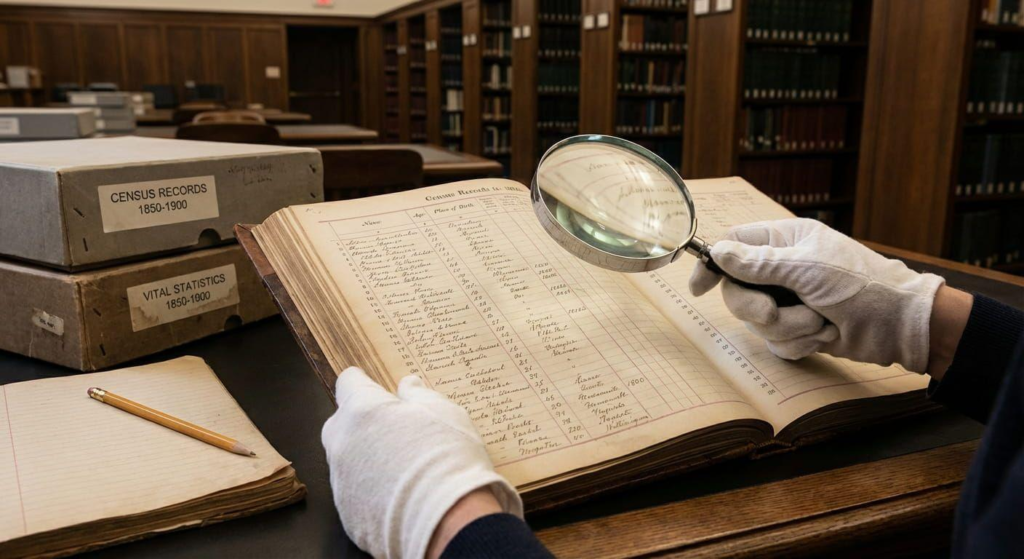
Start with what you have. Work at your own pace. Follow your curiosity.
You never know where your next discovery might lead.
EVERY DISCOVERY MATTERS
A name. A date. A forgotten publication. A handwritten letter. A newspaper advertisement. A family story that leads to a historical record.
Each discovery has the potential to contribute another piece to our collective understanding.
We invite you to participate in this journey, share what you learn, and help us preserve the literary contributions of those who came before us.
Together, we can build a stronger foundation of knowledge for the generations that follow.
Our history is worth finding. Our stories are worth preserving. Our literary legacy is worth reclaiming.